
Why Businesses Choose Mobile App Development Companies Over Freelancers
As mobile technology becomes a central pillar to business strategy, the decision of how to build a custom app has become more critical than ever.
While the low initial cost and perceived flexibility of freelance developers can be tempting, this approach often introduces significant risk—especially for projects requiring long-term viability, high quality, and complex integration.
The majority of successful businesses ultimately pivot towards established mobile app nearshore development companies. Why? Because they offer a structured delivery model, inherent scalability, and unparalleled reliability that solo practitioners simply cannot match.
Mitigating Risk: Continuity and Team Structure
Ensuring Reliable Mobile App Delivery and Business Continuity
One of the major risks with freelancers is the single point of failure they represent. Illness, scheduling conflicts, or shifting priorities can easily derail a solo developer’s timeline. Without structured backup, businesses may find themselves with stalled projects or incomplete deliverables.
By contrast, development companies employ team-based structures where responsibilities are distributed and documented. If a team member becomes unavailable, another can take over without loss of context. This structured approach ensures business continuity. This finding is reinforced by studies like Backsourcing of Software Development: A Systematic Literature Review, which documents how organizations often revert from freelance or poorly managed outsourcing arrangements to regain control, quality, and continuity.
Expertise and Quality: Beyond Solo Coding
What Kind of Experts Are Needed for Mobile App Development?
Modern mobile applications require more than just clean code. UI/UX Design, complex architecture, backend integration, security, Quality Assurance (QA), and ongoing maintenance all play critical roles. Most freelancers specialize in just one or two of these areas, limiting their ability to deliver fully realized, robust products.
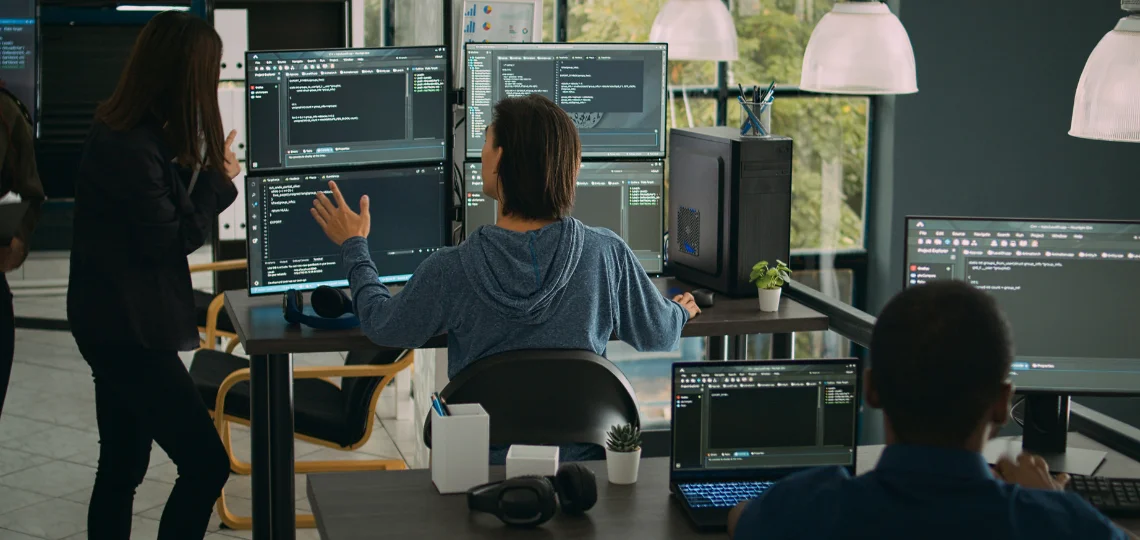
Mobile app development companies assemble comprehensive cross-functional teams to ensure success at every phase:
- UI/UX Designers: To ensure intuitive and engaging user experience.
- Frontend and Backend Developers: For robust coding and integration.
- QA Testers: To guarantee stability and performance.
- DevOps Engineers: For automated deployment and infrastructure management.
- Project Managers/Scrum Masters: To manage timelines and communication.
This collective expertise ensures quality and avoids critical bottlenecks. The benefits of this structured approach are quantifiable: A study titled “The Effects of Continuous Integration on Software Development” demonstrates that organized development environments, particularly those leveraging continuous integration (CI), consistently achieve better code quality and reduce software defects.
Implementing CI/CD and Process Discipline for Superior Mobile App Code Quality
Established development firms rely on formalized practices such as version control, peer review, automated testing, and CI/CD pipelines. These aren't just best practices—they are critical to delivering secure, scalable, and maintainable applications.
Freelancers may lack the necessary infrastructure or internal discipline to maintain such rigor consistently. According to Continuous Integration, Delivery and Deployment: A Systematic Review, teams that adopt structured CI/CD workflows report significantly higher quality outcomes and more stable releases.
Scalability and Speed: Meeting Business Demand
Achieving Faster Mobile App Time to Market Through Scalable Teams
Business needs evolve rapidly. A company’s ability to scale teams—adding testers, developers, or designers as needed—can directly affect its speed to market and ability to meet unexpected demand.
Team Scalability: Core to Structured Mobile App Development
This on-demand scalability is a key benefit of structured development teams. Unlike the limited bandwidth of a freelancer, a development firm can quickly reallocate resources. This necessity for structure is highlighted in the review “Backsourcing of IT with Focus on Software Development”, which found that organizations previously using loosely managed external vendors often returned to more structured engagements specifically to regain delivery speed, improve communication flow, and restore development agility.
Legal and Long-Term Value
Ensuring Legal Compliance (GDPR, HIPAA) and Mobile App Data Security
For companies in regulated industries such as finance or healthcare, compliance with security and privacy standards like GDPR, HIPAA, or PCI-DSS is non-negotiable. Mobile development firms provide Non-Disclosure Agreements (NDAs), clear IP ownership terms, and built-in security protocols.
When outsourcing to solo freelancers, especially internationally, businesses face legal ambiguity and limited recourse in case of disputes. A recent review published in Information and Software Technology highlights that backsourcing often occurs due to failure to meet legal, security, or operational standards under loosely managed external engagements. For reliable compliance, companies often choose proven partners.
Guaranteed Post-Launch Support and App Lifecycle Management (SLAs)
An app’s true test begins after launch. Ongoing support—OS updates, feature improvements, server monitoring, and bug fixes—is essential to its long-term success.
Development companies provide structured post-launch support: Service Level Agreements (SLAs), maintenance plans, analytics integration, and security patches. Freelancers may become unavailable or lose interest over time, leaving a business’s critical asset unsupported. The same Backsourcing Review underscores this lack of guaranteed long-term support as a recurring problem in freelance engagements.
Strategic Partnerships for Mobile App Evolution, Not Just Outsourcing
When your mobile product is tied directly to revenue, growth, or user experience, you don't just need developers—you need strategic partners. Mobile app development firms provide guidance through discovery, planning, prototyping, testing, deployment, and long-term evolution.
The Performance Implications of Outsourcing study found that when companies outsource critical tech functions to qualified partners—not freelancers—they are more likely to see measurable improvements in operational and market performance.
The Strategic Choice: Structured Teams vs. Solo Developers
Freelancers can be effective for limited internal tools or early-stage prototypes. But when quality, compliance, speed, and long-term support matter, mobile app development companies offer far more value.
Their structured processes, multidisciplinary expertise, legal protections, and full-lifecycle services reduce business risk and improve outcomes. In today’s high-stakes mobile landscape, choosing a development company, especially a nearshore partner, isn’t just a technical decision—it's a business-critical investment in a high-quality, sustainable product.
What’s Next for Your Mobile Strategy?
Ready to build a reliable, scalable mobile application with a partner that ensures continuity, quality, and compliance from design through post-launch support?
Contact AssureSoft today to start a conversation about your mobile development needs!