The AI-powered Senior Engineer Checklist
AI has changed how senior engineers add value. This checklist will help you see if your hiring criteria have kept up.
AI makes code easier to produce
It also makes weak judgment more dangerous
This means
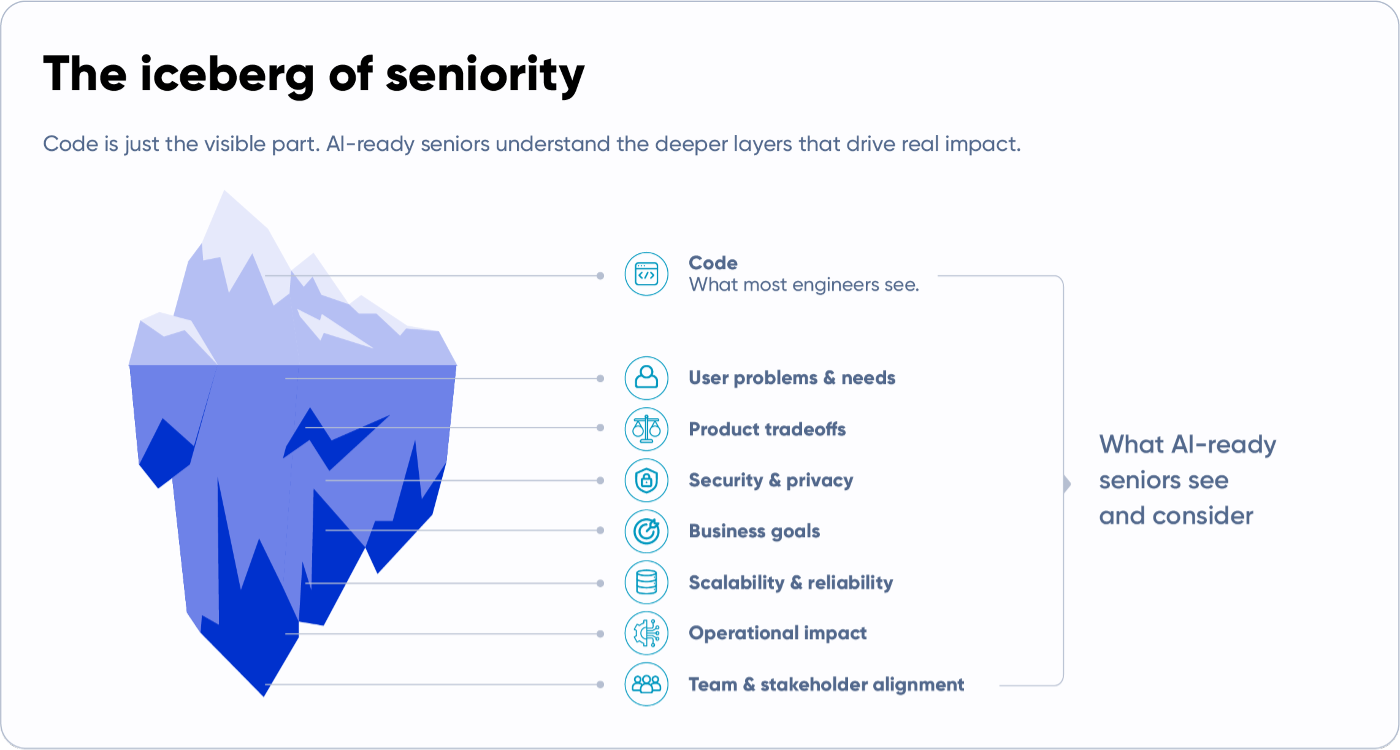
senior-level value has changed and is harder to spot
Using AI more does not make someone more senior. Seniority shows up in knowing when AI adds value, when it slows progress, and when it introduces risk. Strong candidates use AI to automate manual work and explore options. But they keep control over architecture, security, scalability, and final decisions.
Senior signal
Can this engineer decide what to delegate, how much context to provide, when to stop using AI, and how to validate the result?
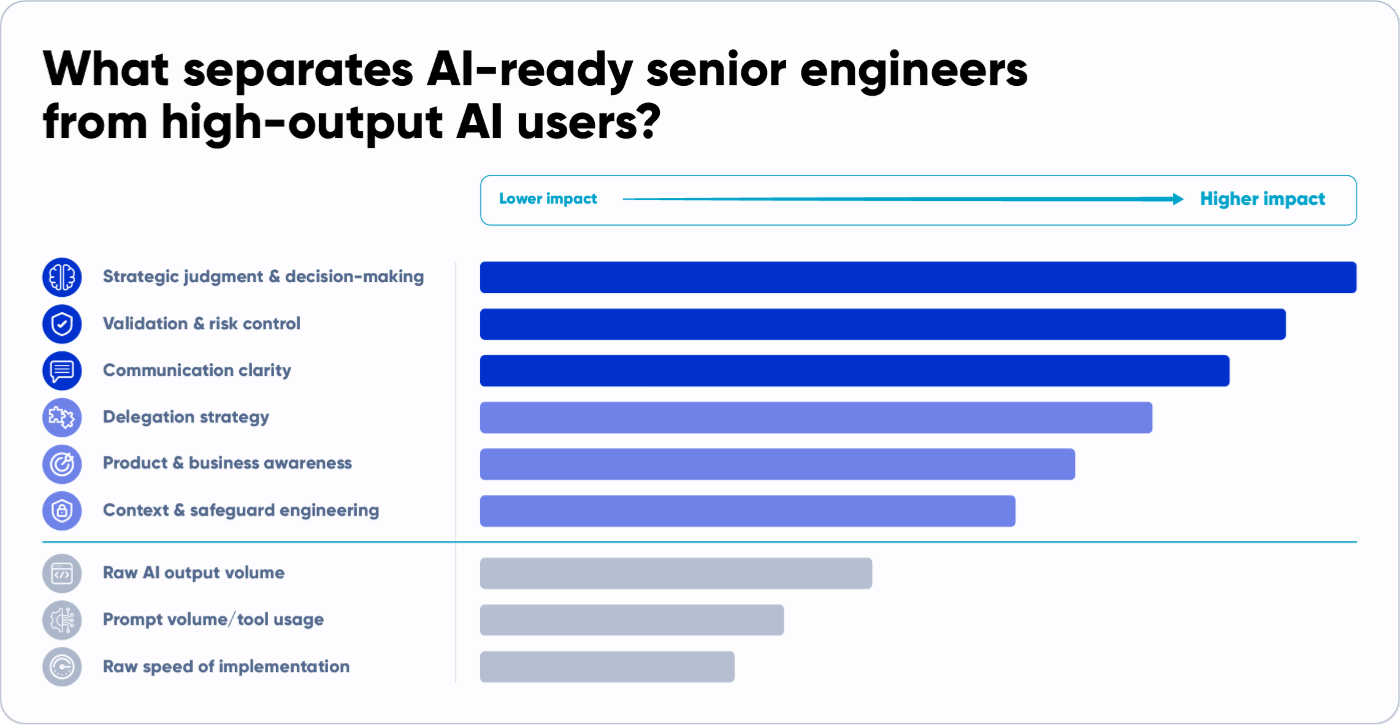
In AI-assisted development, unclear instructions create unclear output. Senior engineers reduce that risk by defining goals, constraints, trade-offs, and validation criteria before execution begins.
Strong candidates turn vague requirements into clear written direction. They explain complex ideas in plain language, so teammates and AI tools can move with less ambiguity and rework.
Senior signal
Can this engineer turn technical judgment into clear instructions?
AI is changing how software gets built, but the strongest senior engineers do not define their value by a specific technology, tool, or workflow. They stay curious, keep learning, and adapt as the industry evolves. The focus remains on solving problems and delivering outcomes rather than preserving familiar ways of working or chasing hyped technologies for their own sake.
Accountability extends to AI-assisted output. Senior engineers own the final result, even when the path to producing it looks different.
Senior signal
Can this engineer adapt to new ways of working while still taking responsibility for the quality, usefulness, and impact of the outcome?
Senior engineers define the context, constraints, risks, and success criteria before execution. As AI generates an output, they verify that it meets technical, security, scalability, and production requirements. Without these controls, faster execution can still create unnecessary risk and rework.
Senior signal
Can this engineer set the right boundaries before execution and verify the result after it?
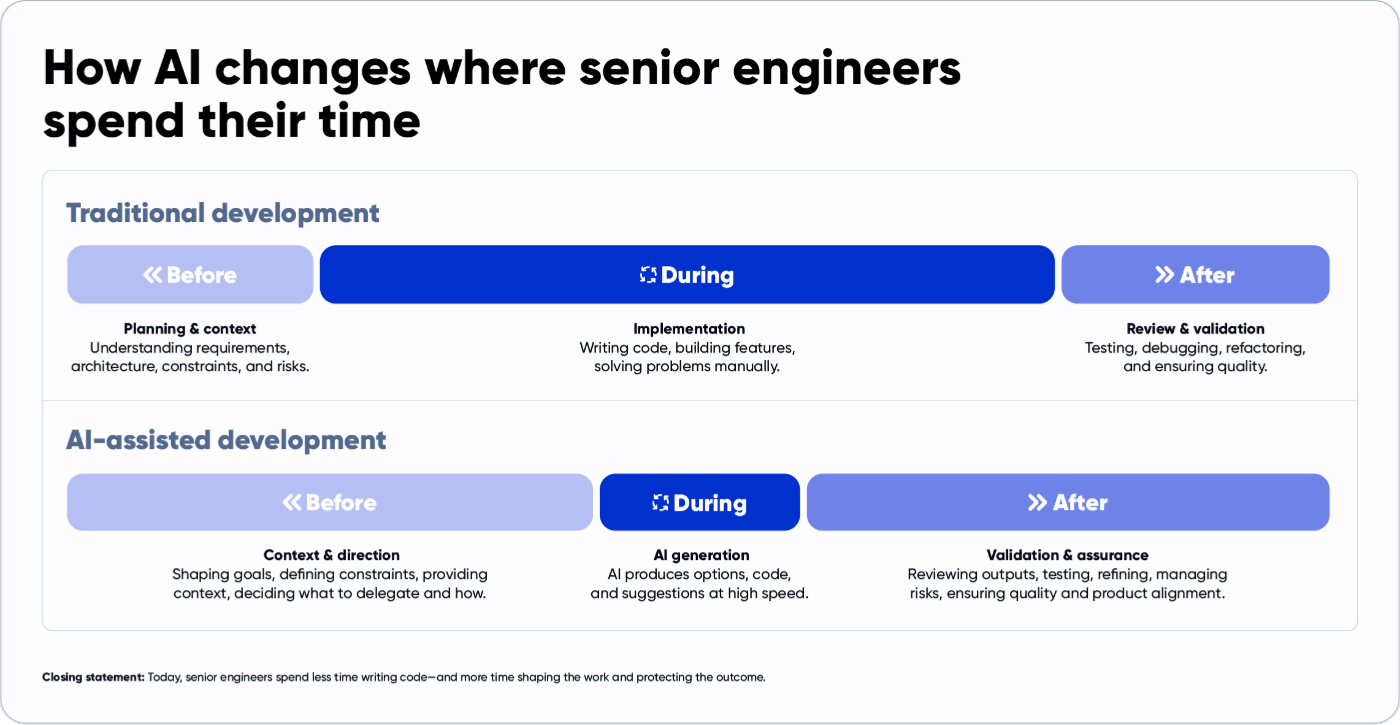
As AI advances, software engineers are increasingly becoming curators. They act as a filter between possibility and reality, deciding what should move forward, what requires refinement, and what should be rejected altogether before it becomes part of the product.
Their judgment helps protect product quality, maintainability, and long-term stability.
Senior signal
Can this engineer tell what can be trusted, what needs to change, and what should not move forward?
In AI-assisted development, a feature must do more than work. It must solve the user’s problem, fit the roadmap, and support a business outcome. Senior engineers ask three questions: Who is it for? What problem does it solve? What does success look like? The answers help them build or challenge the request.
Senior signal
Can this engineer connect technical decisions to user needs, product priorities, and business outcomes?